
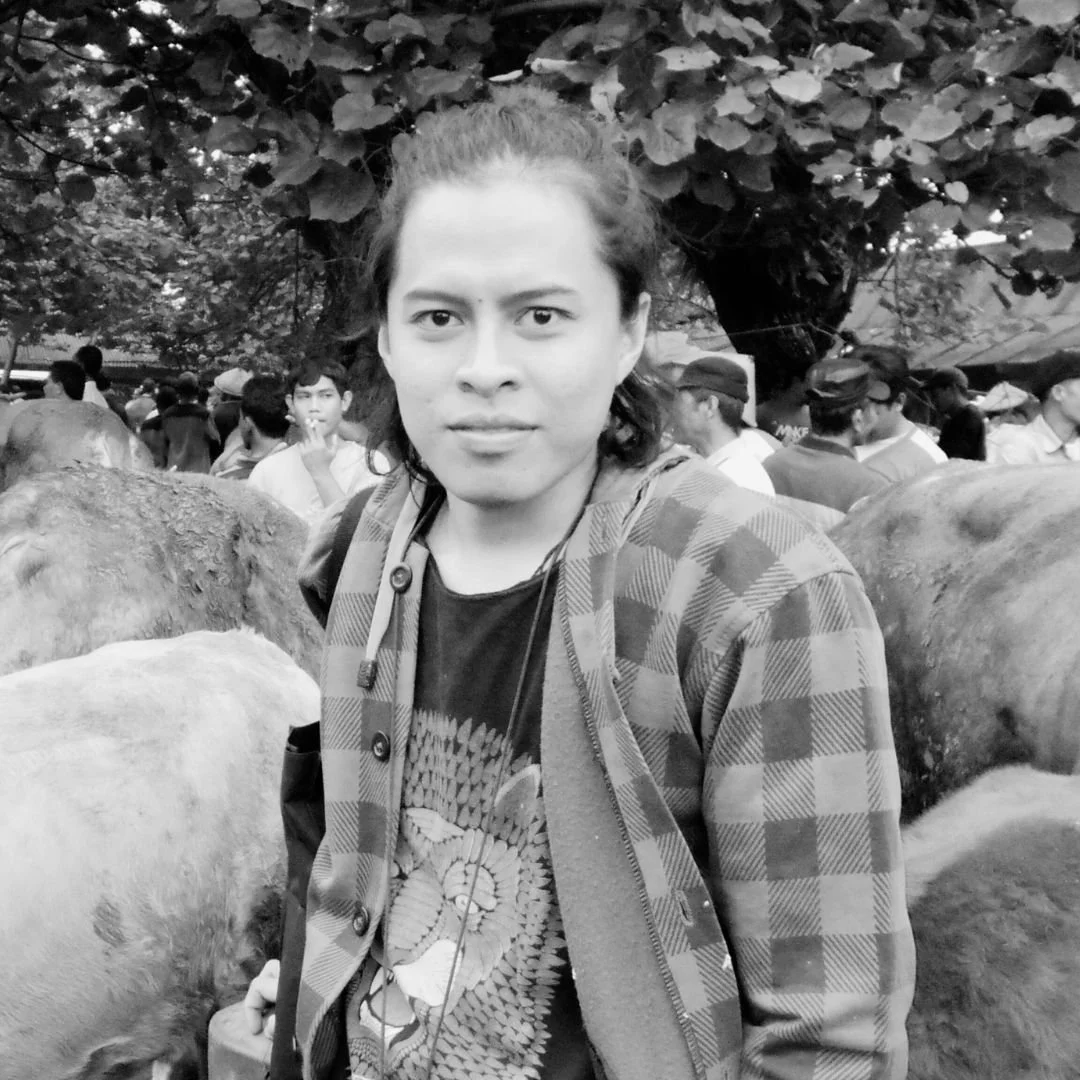
Suvi Wahyudianto
Indonesia
Suvi Wahyudianto (b. 1993, Bangkalan) is a Madurese visual artist who studied Visual Arts Education at Surabaya State University and is currently based in Yogyakarta. His artistic practice primarily addresses socio-cultural issues, ethnic identity, collective memory, and the dynamics of migration and the Madurese diaspora (merantau). Through ethnographically grounded research, Wahyudianto works across diverse media, ranging from installation art, ceramics, and monoprinting to unconventional materials like tobacco juice, traditional velvet caps (peci), batik fabrics, and brass coins.
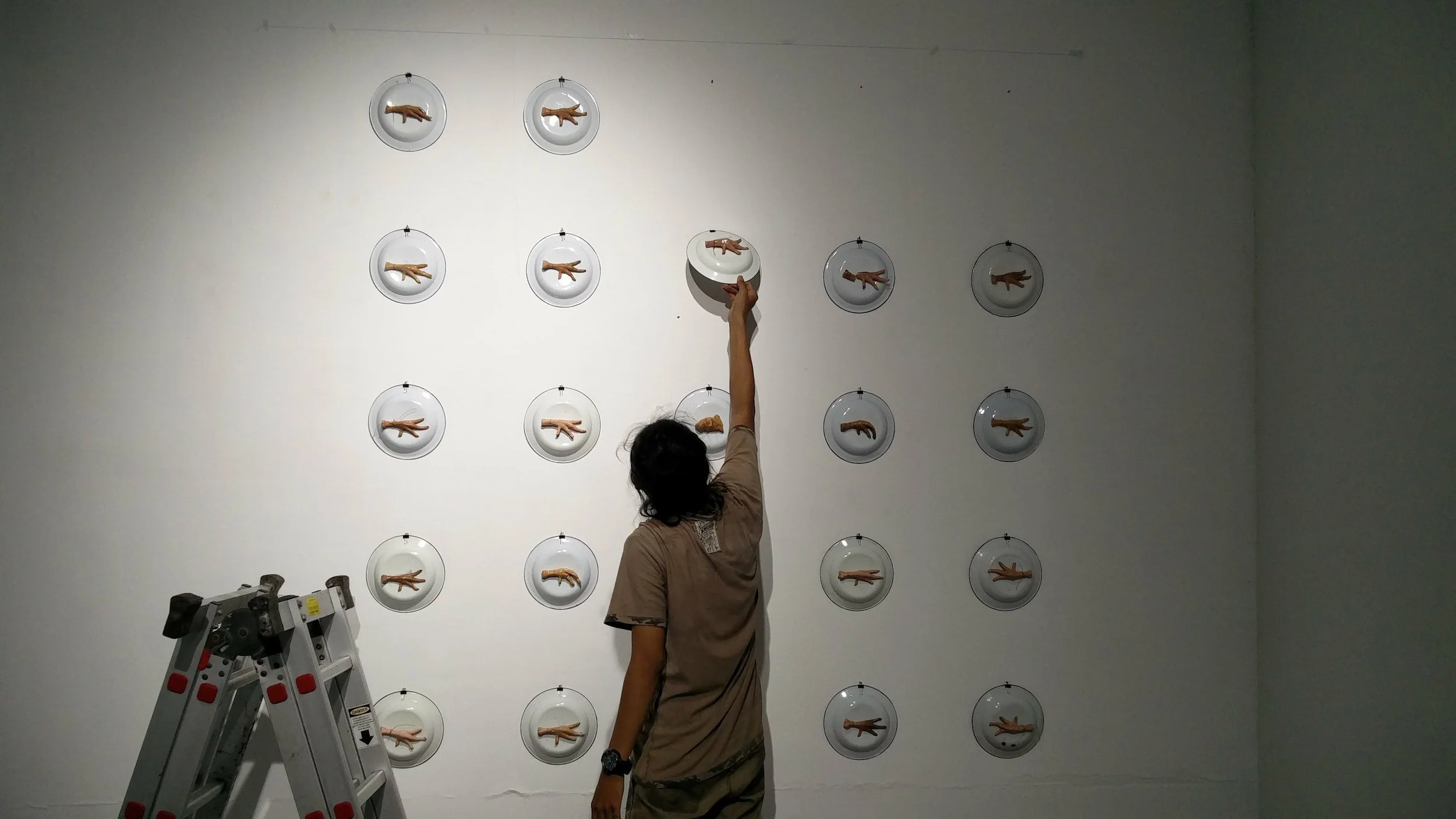
His works examine identity negotiation, work ethic, and memories of home through pieces steeped in local philosophy, such as Akar-kar Nyolpe, which draws parallels between human survival and a chicken scratching for food. Alongside installations featuring inverted plates, ceramic chicken feet, peci-clad skulls (Kocca Celeng), and portraits painted with tobacco juice (Paman). Through these visual metaphors, he offers a poignant critique of economic struggle, tradition, and the enduring bond between migrants and their homeland.
ONGGHA
Solo Exhibition - 12 April – 13 May, 2017
REDBASE Foundation Indonesia
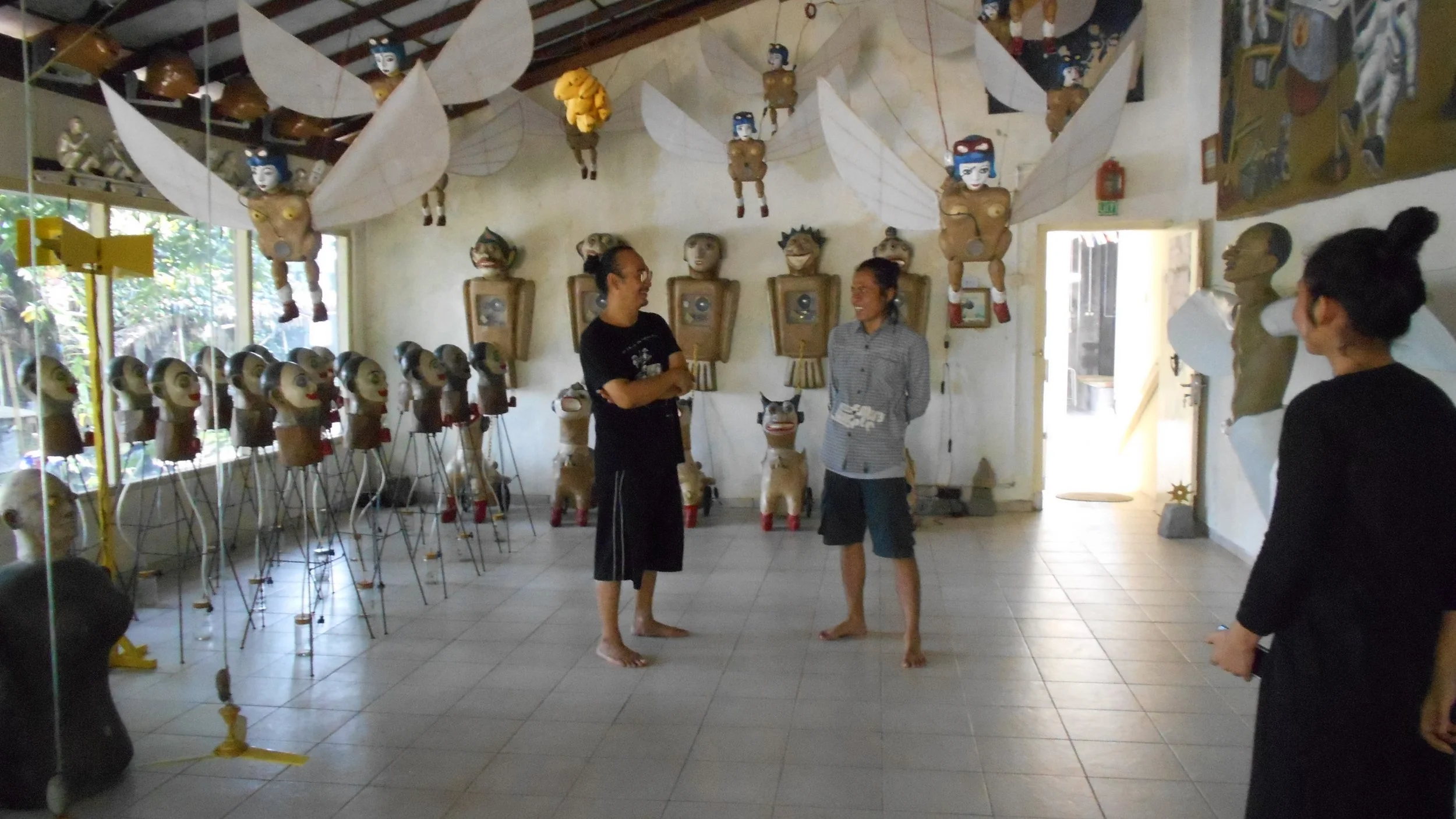
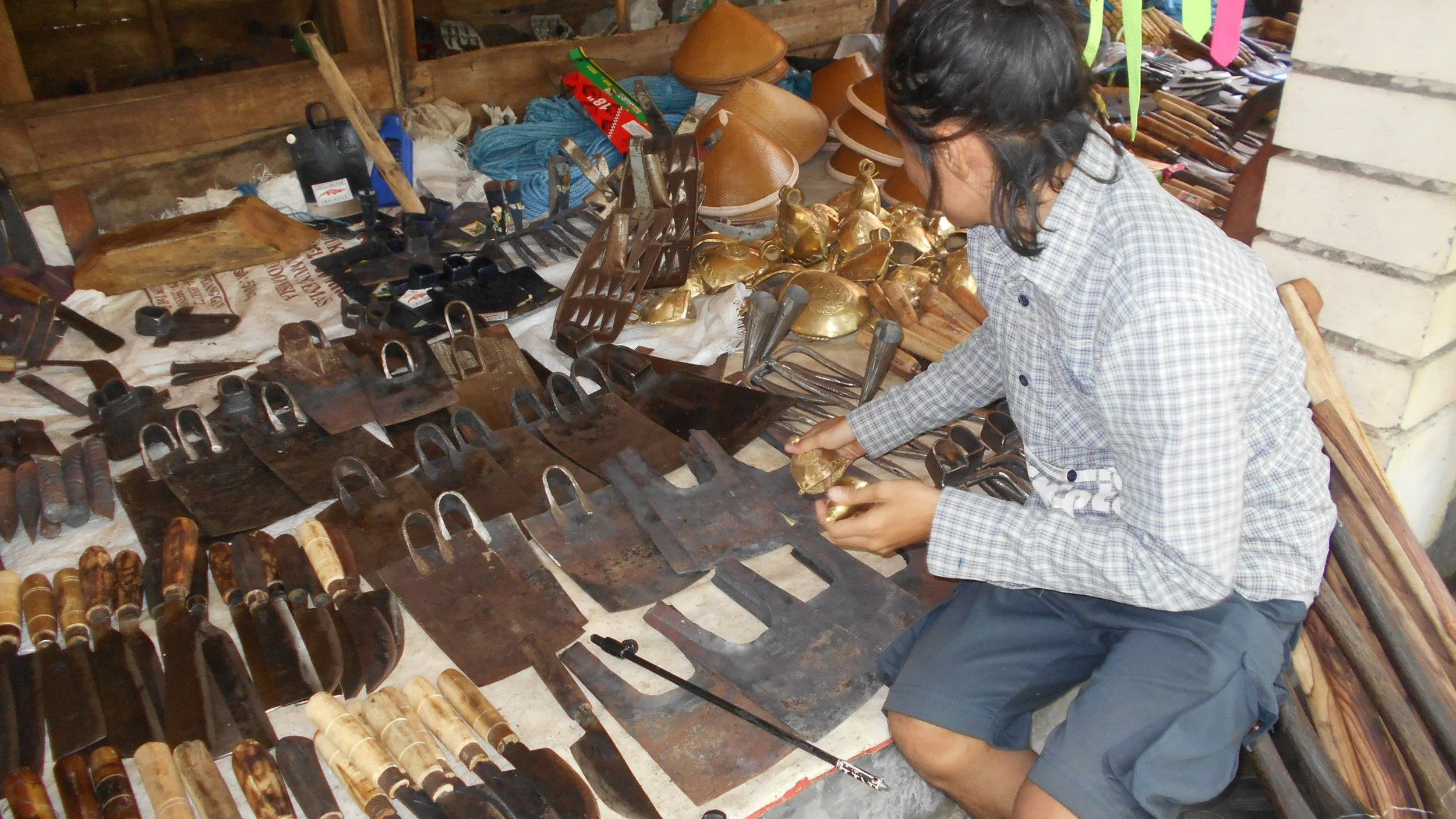
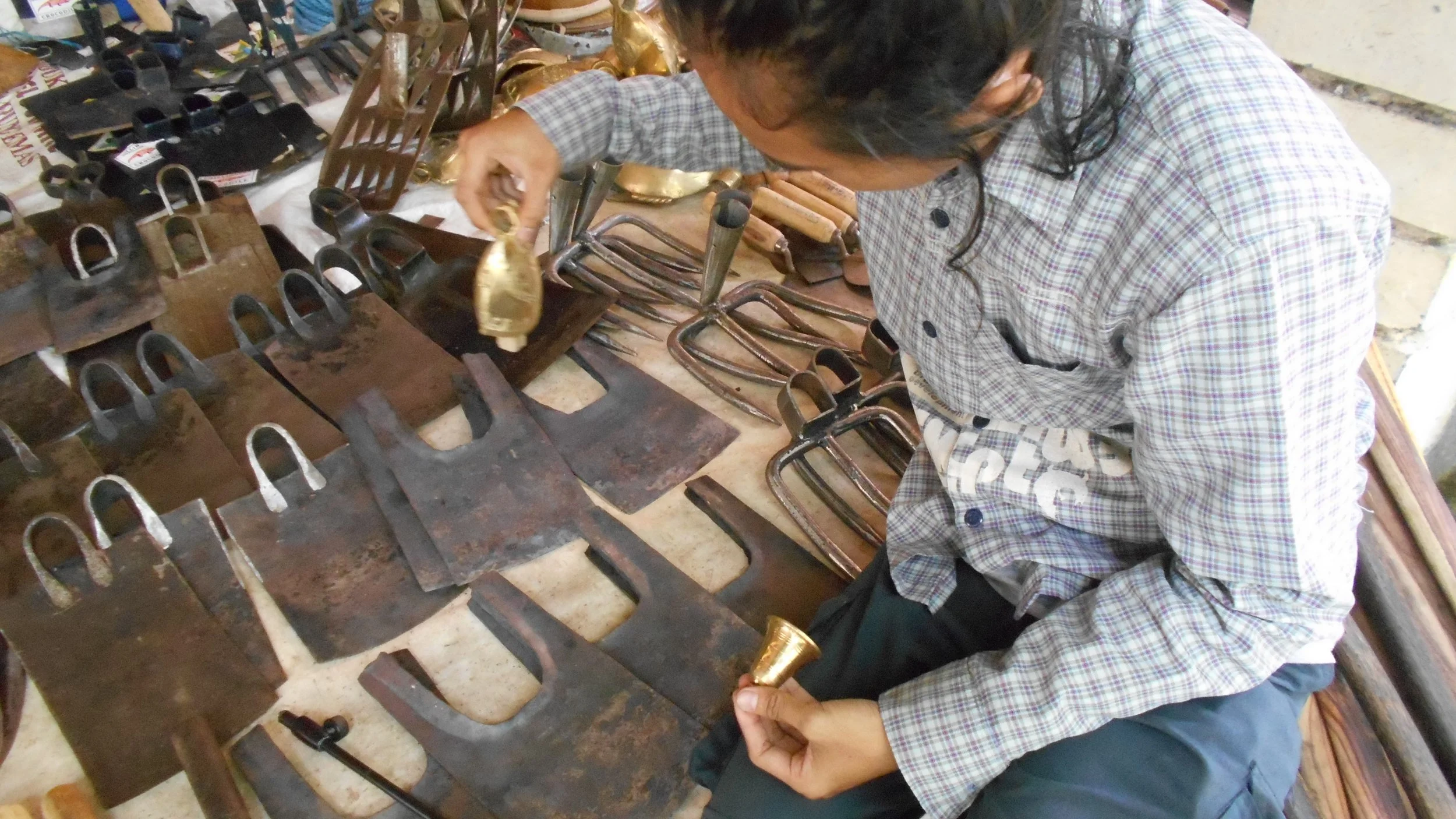
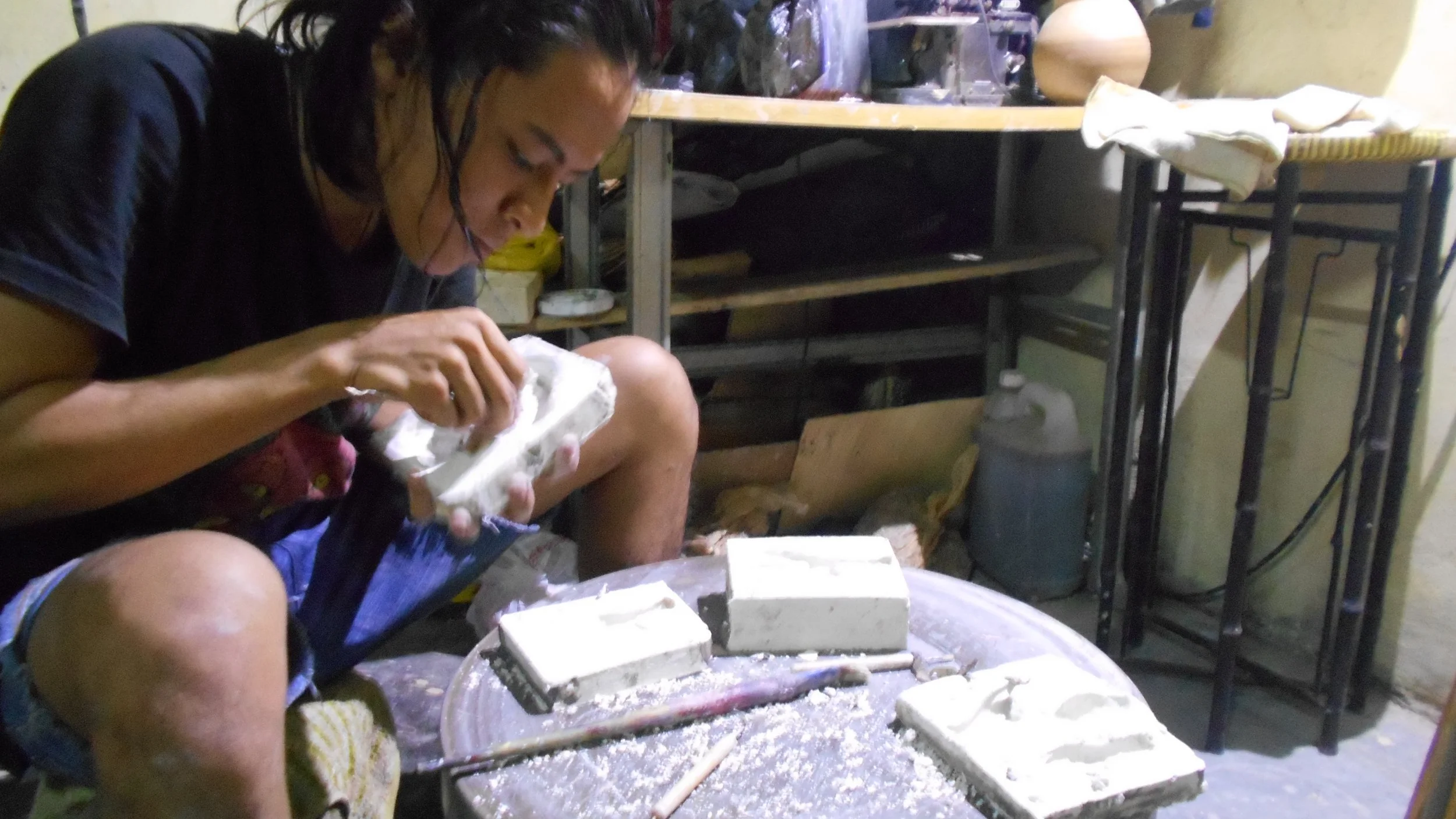
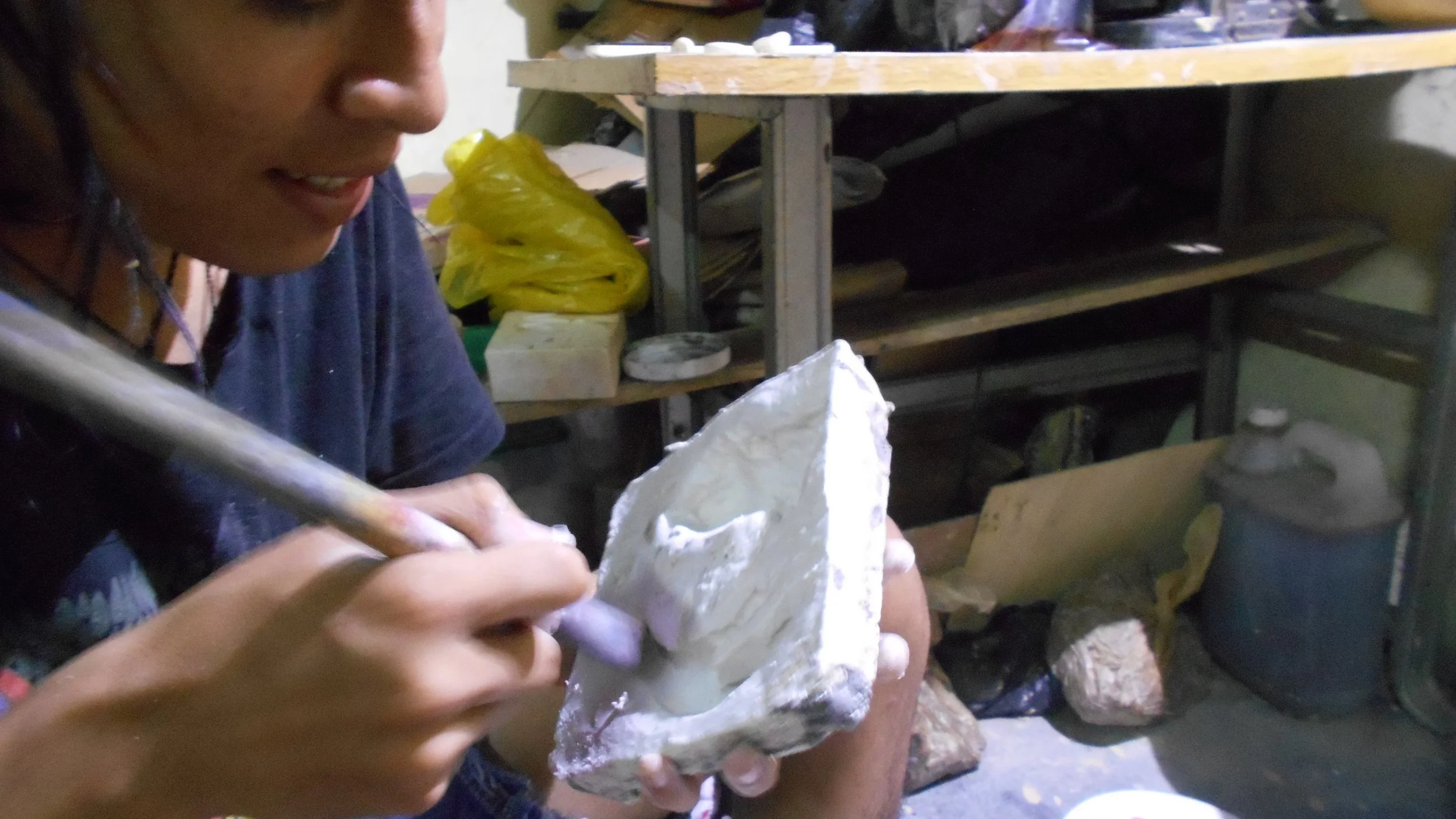
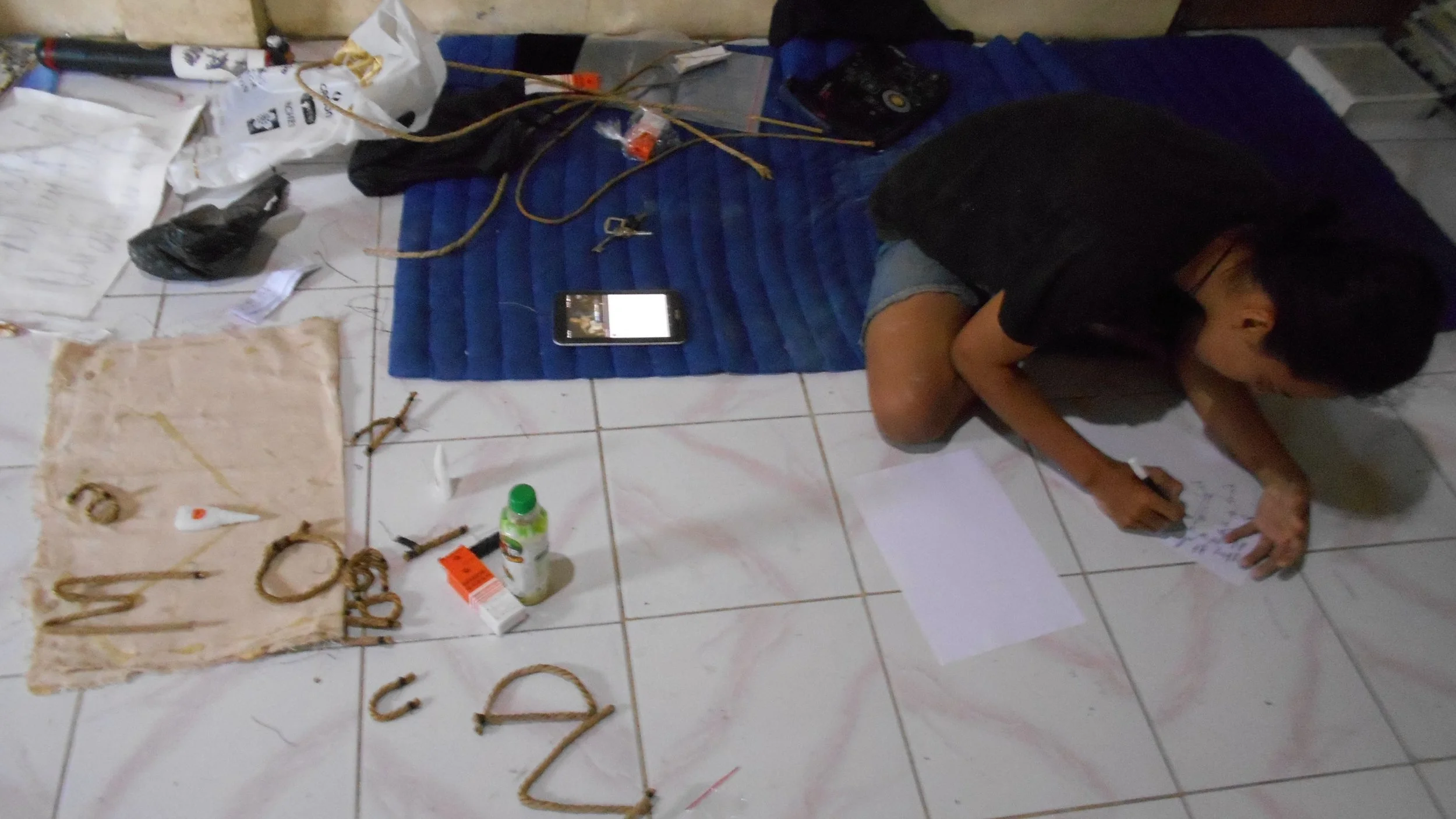
ONGGHA critically examines the historical, cultural, and personal dimensions of Madurese migration. Derived from the Madurese term meaning "to ascend" or "to set out," onggha reflects a long legacy of economic movement driven by necessity, while confronting the lingering social tensions and colonial stereotypes attached to the Madurese identity. Through a reflective lens, the exhibition navigates the complex experience of leaving home, structuring its visual narrative around three interconnected themes: memory, tension, and cultural intersection.
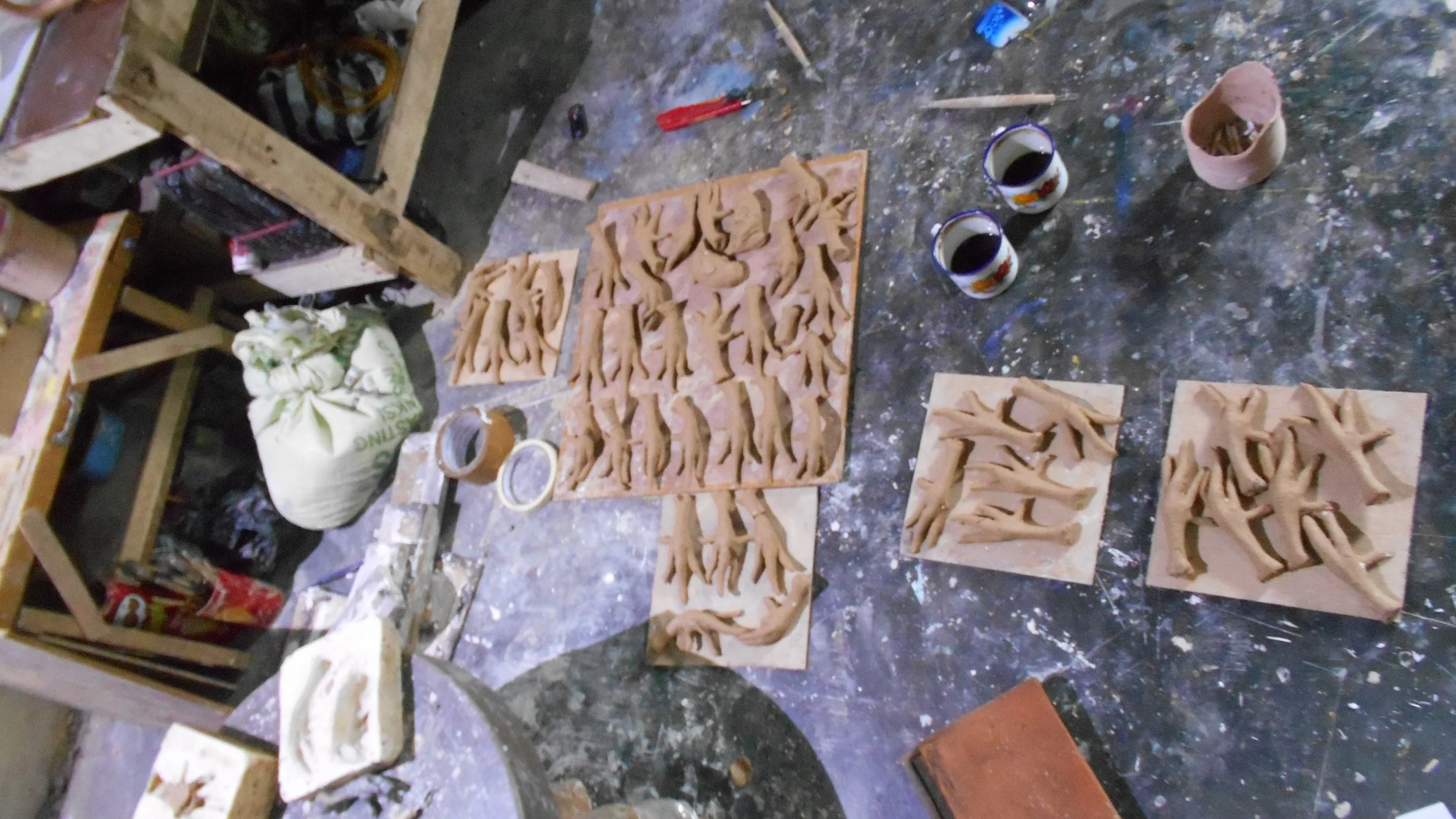
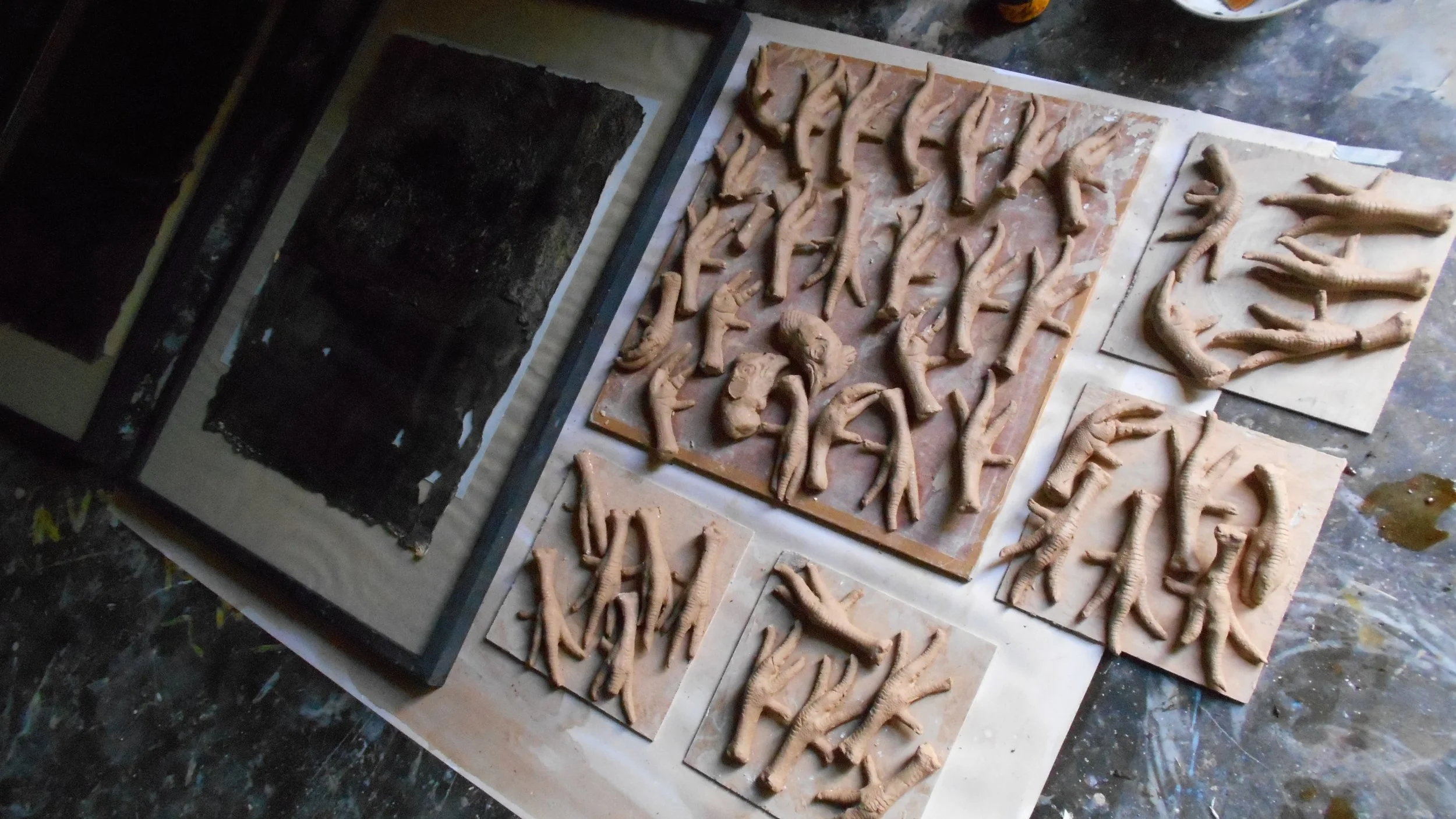
The first thread, memory, delves into primordial roots and childhood nostalgia, employing motifs like chicken feet (akarkar nyolpe') as symbols of the persistent work ethic inherent to Madurese survival. The second, tension, highlights the psychological pull between rural origins and urban migration, using recognizable cultural markers like Madurese satay banners to illustrate how ethnic identity is defined outside one's homeland. The final element, intersection, addresses cultural adaptation, using familiar domestic objects like industrial biscuits in traditional jars to show how global and local elements meld into everyday life. Rather than offering rigid conclusions, ONGGHA serves as an open artistic inquiry into identity, belonging, and the evolving relationship between Madura and the wider world.

Mole Monoprint on canvas, batik and wooden frame 23 cm x 28 cm (6 panels), 2017

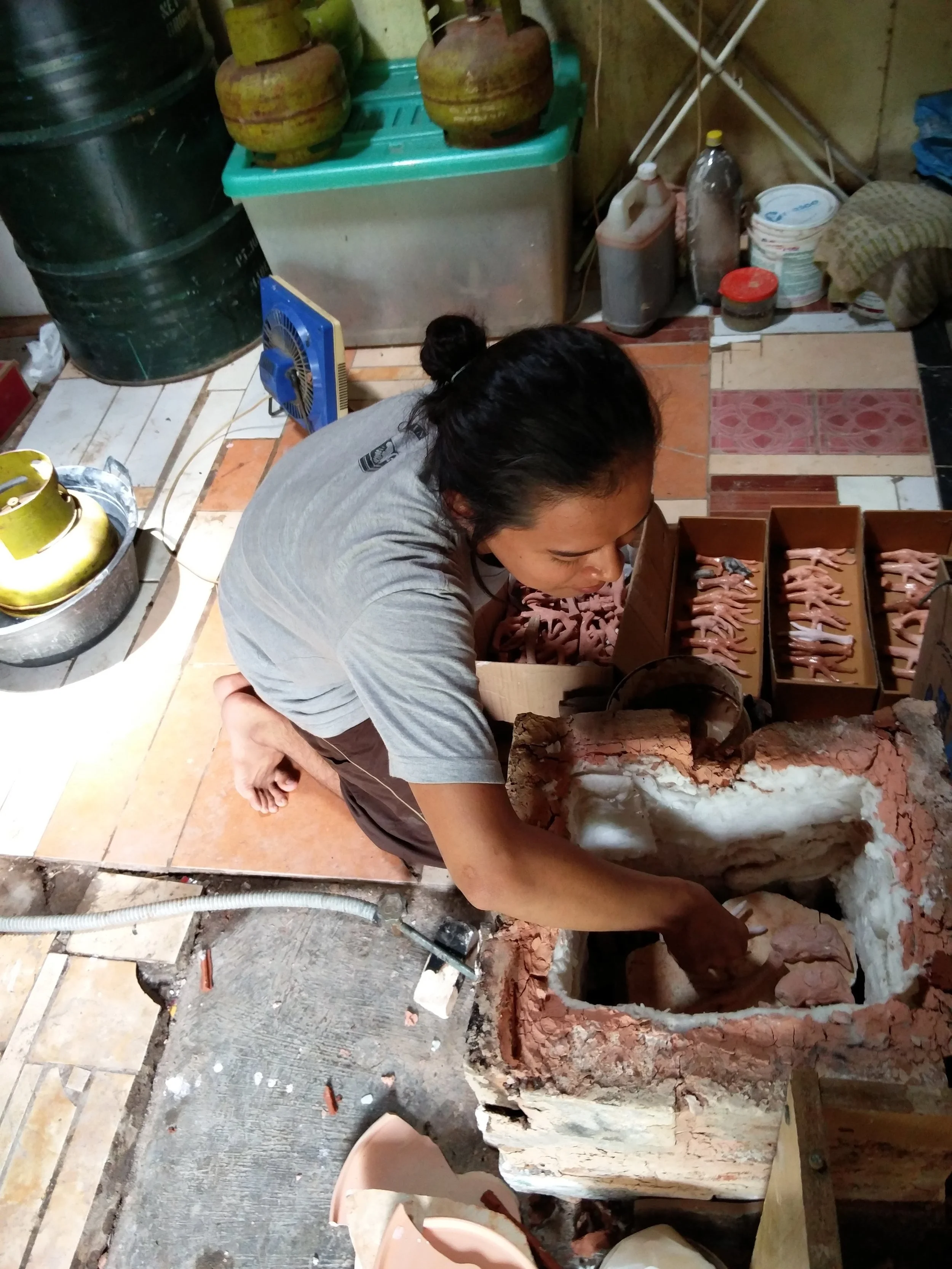
Akar-kar Nyolpe #1 Metal plate and ceramic Diamater 20 cm (20 pcs), 2017
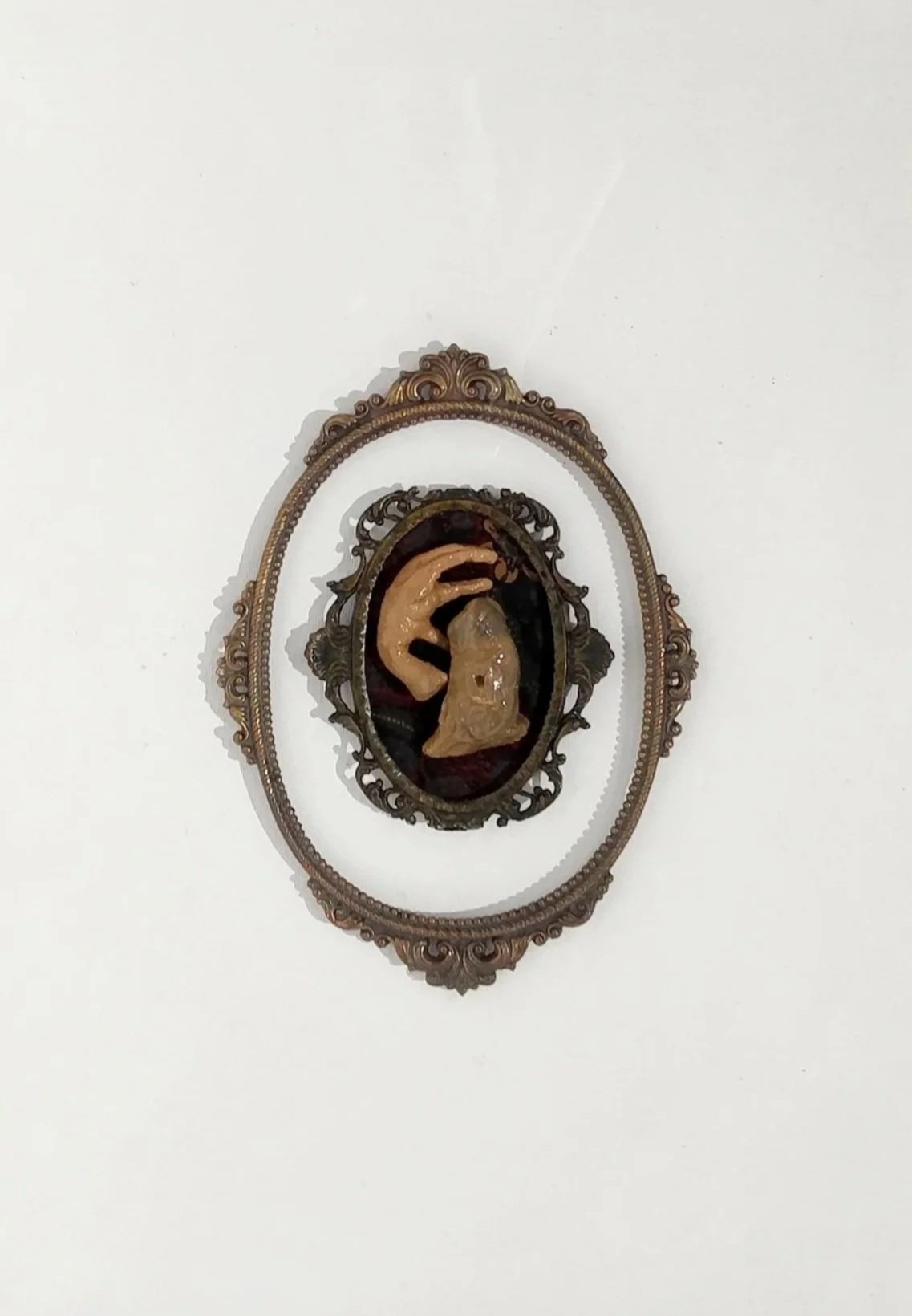
Akar-kar Nyolpe #2 Ceramic, copper frame and wooden frame 54 cm x 74 cm x 5 cm, 2017
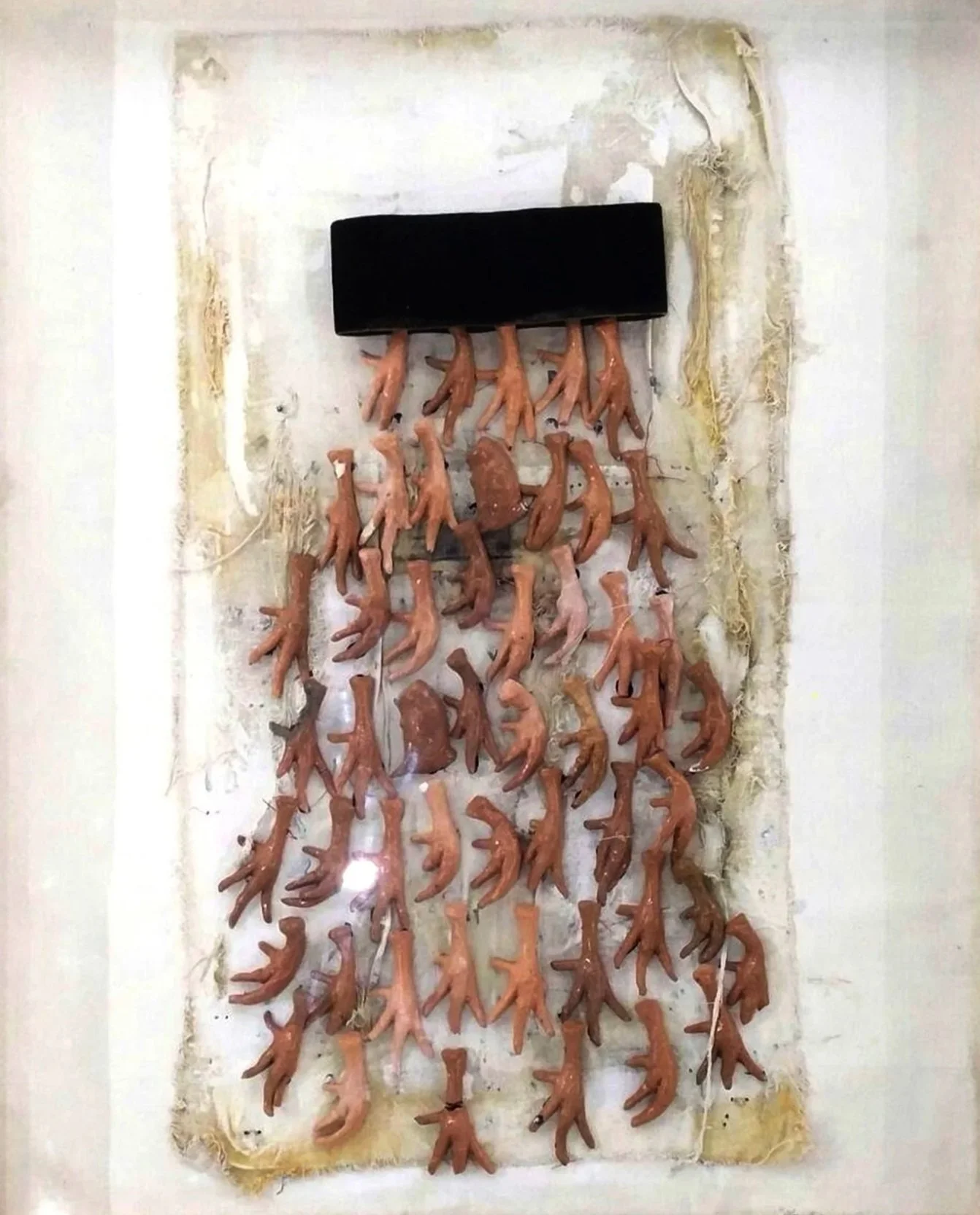
Akar-kar Nyolpe #3 Ceramic, canvas, plywood, muslim hat and wooden frame 84 cm x 104 cm x 8 cm, 2017

Akar-kar Nyolpe #4 Paper and ink 22 cm x 25 cm (20 sheets), 2017

Akar-kar Nyolpe #5 Video 1'00", 2017

Kocca Celeng Ceramic, muslim hat and wooden box Variable dimension, 2017

Nyai Ro Monoprint on paper and wooden frame 20 cm x 7 cm (8 panels), 2017

Mari Ceramic, copper frame and wooden frame 12 cm x 12 cm x 16 cm (4 pcs), 2017

Engon Ceramic, copper frame and wooden frame 73 cm x 28 cm (2 panels), 2017

Paman Tobacco juice painting and wooden frame 40 cm x 50 cm, 2017

Tribute to Pak Suli Found object 130 cm x 95 cm, 2017